
Amazon US: Enforcement, Arbitration & Reinstatement
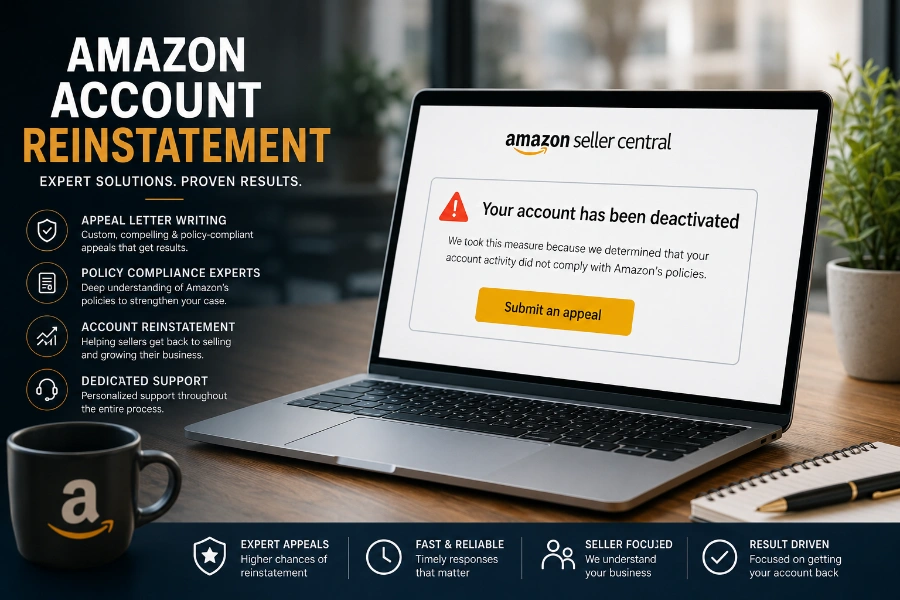
US sellers facing significant held funds with no other route open often end up looking at BSA arbitration — the contractual dispute process specified in Amazon’s Business Solutions Agreement, since US sellers do not have the regulatory complaint route available to UK sellers.
What’s Different About US Enforcement
US enforcement runs primarily through Seller Central appeals and, where funds are large enough to justify it, arbitration. There is no equivalent to the UK’s Financial Ombudsman Service route for US sellers.
Read the full BSA arbitration guide
The AHR Threshold and US Accounts
Amazon’s Account Health Rating threshold applies across marketplaces, but the practical effect for US sellers is the same: an account falling below the current threshold risks deactivation regardless of prior standing.
Every Amazon violation type · Held funds recovery
What US Sellers Should Know Before Appealing
US sellers do not have access to the regulatory complaint route available in the UK, since there is no equivalent to Amazon Payments UK Limited or the Financial Ombudsman Service in the US marketplace. That makes the internal appeal, and where necessary BSA arbitration, the primary paths available.
For US sellers, the diagnostic step matters more than in any other marketplace, because there is no second regulatory body to fall back on if the first appeal is wrong. Getting the root cause right the first or second time carries more weight here than in jurisdictions with a regulatory backstop.
Sales Tax Nexus and US Reinstatement Cases
US sellers occasionally face account holds connected to sales tax compliance questions across states. While this is a separate issue from Amazon policy enforcement, it can surface during account reviews and is worth having documentation ready for, alongside your standard appeal materials.
Send us your US notice for a free case review
Looking at Amazon US: Enforcement, Arbitration & Reinstatement more closely, the outcome usually hinges on how well the response matches Amazon’s specific stated reason rather than a general explanation.
None of this guarantees a specific outcome, but it puts your case in the best possible shape before Amazon reviews it.
Looking at Amazon US: Enforcement, Arbitration & Reinstatement more closely, the outcome usually hinges on how well the response matches Amazon’s specific stated reason rather than a general explanation.
None of this guarantees a specific outcome, but it puts your case in the best possible shape before Amazon reviews it.
When it comes to Amazon US: Enforcement, Arbitration & Reinstatement, sellers frequently underestimate how much documentation Amazon expects before a case is even reviewed. Reviewers typically look for a clear root-cause explanation, supporting evidence such as invoices or shipping records, and a forward-looking plan that shows the same issue will not recur. None of this replaces reading the specific notice Amazon sent, since wording and required evidence can vary case by case.
Many sellers reach out about Amazon US: Enforcement, Arbitration & Reinstatement only after their first attempt has already been rejected, which makes the second attempt far more important to get right. Account health metrics from the 60 to 90 days before the issue are usually part of the picture reviewers consider, even if they are not mentioned explicitly in the notice. Timelines quoted by other sellers online are not guarantees — plan for the process to take longer than expected.
A well-prepared response to Amazon US: Enforcement, Arbitration & Reinstatement issues usually shares a few traits: it is specific, dated, and tied directly to the policy language cited. Cases that reference the exact policy clause, include dated screenshots, and avoid vague language about ‘improving processes’ are processed noticeably faster in most reported experiences. Consistency between what is claimed in the appeal and what is visible in the account’s actual order history matters more than polished language.
Amazon US: Enforcement, Arbitration & Reinstatement is one of those areas where the difference between a fast resolution and a stalled account often comes down to preparation, not luck. Keeping a running log of supplier communications, tracking numbers, and internal QC checks makes future submissions faster since the evidence is already organized. Every account’s history is different, so treat general guidance as a starting point rather than a guaranteed template.