
Suspension Guides
Browse our Amazon suspension guides: step-by-step guides for Section 3, ASIN, IP, DSAR, and funds cases, so you can find the guide that matches your notice.
- ASIN Suspension vs Account Suspension: What’s the Difference?
- Amazon Valid Tracking Rate (VTR) Suspension: How to Fix It
- Amazon Seller Account Deactivated? Here’s How We Fix It
- Amazon DSAR Request for Sellers: What It Reveals and How to Use It
- How a DSAR Can Help Your Amazon Case
- Amazon Section 3 Suspension — Complete Guide to Reinstatement
- Data Subject Access Request (DSAR)
Looking at Suspension Guides more closely, the outcome usually hinges on how well the response matches Amazon’s specific stated reason rather than a general explanation.
Start by isolating the exact clause or policy line cited in your notice, and build your response directly around that wording instead of your general business practices.
None of this guarantees a specific outcome, but it puts your case in the best possible shape before Amazon reviews it.
Looking at Suspension Guides more closely, the outcome usually hinges on how well the response matches Amazon’s specific stated reason rather than a general explanation.
Start by isolating the exact clause or policy line cited in your notice, and build your response directly around that wording instead of your general business practices.
None of this guarantees a specific outcome, but it puts your case in the best possible shape before Amazon reviews it.
When it comes to Suspension Guides, sellers frequently underestimate how much documentation Amazon expects before a case is even reviewed. Reviewers typically look for a clear root-cause explanation, supporting evidence such as invoices or shipping records, and a forward-looking plan that shows the same issue will not recur. None of this replaces reading the specific notice Amazon sent, since wording and required evidence can vary case by case.
Many sellers reach out about Suspension Guides only after their first attempt has already been rejected, which makes the second attempt far more important to get right. Account health metrics from the 60 to 90 days before the issue are usually part of the picture reviewers consider, even if they are not mentioned explicitly in the notice. Timelines quoted by other sellers online are not guarantees — plan for the process to take longer than expected.
A well-prepared response to Suspension Guides issues usually shares a few traits: it is specific, dated, and tied directly to the policy language cited. Cases that reference the exact policy clause, include dated screenshots, and avoid vague language about ‘improving processes’ are processed noticeably faster in most reported experiences. Consistency between what is claimed in the appeal and what is visible in the account’s actual order history matters more than polished language.
Suspension Guides is one of those areas where the difference between a fast resolution and a stalled account often comes down to preparation, not luck. Keeping a running log of supplier communications, tracking numbers, and internal QC checks makes future submissions faster since the evidence is already organized. Every account’s history is different, so treat general guidance as a starting point rather than a guaranteed template.
Suspension Guides sits at the intersection of policy compliance and operational history, so a single missing data point can change how a case is read. Where third-party suppliers or freight partners are involved, naming them directly along with dates and order numbers reduces the chance of the case being read as incomplete. Getting a second pair of eyes on the draft before submission catches gaps that are easy to miss after reading a notice repeatedly.
Amazon Suspension Guides: How to Pick the Right One
The Amazon suspension guides on this page each cover a different enforcement type. Start with the guide that matches your notice — Section 3, ASIN, IP, DSAR, or funds — then follow the steps in order.
Amazon suspension guides work best when you read the guide before you write the appeal. The guide explains what Amazon found and what evidence it wants; the appeal then answers that specific finding.
Frequently Asked Questions
Which Amazon suspension guides should I read first?
Read the Amazon suspension guides that match your notice. If the notice mentions Section 3, start there. If it mentions an ASIN or an IP complaint, start with that guide.
Do the guides cover every marketplace?
Yes. The guides cover the US, UK, EU, UAE, and Canadian marketplaces. The enforcement types are the same; adapt the details to your marketplace.
What if my notice mentions more than one issue?
Read each guide that applies, then address the issues together in one appeal. Filing separate appeals for linked issues can slow the case down.
Related reading: see the frequently asked questions and get a free case review for more Amazon suspension guides.
For the official rules, see Amazon Seller Central.
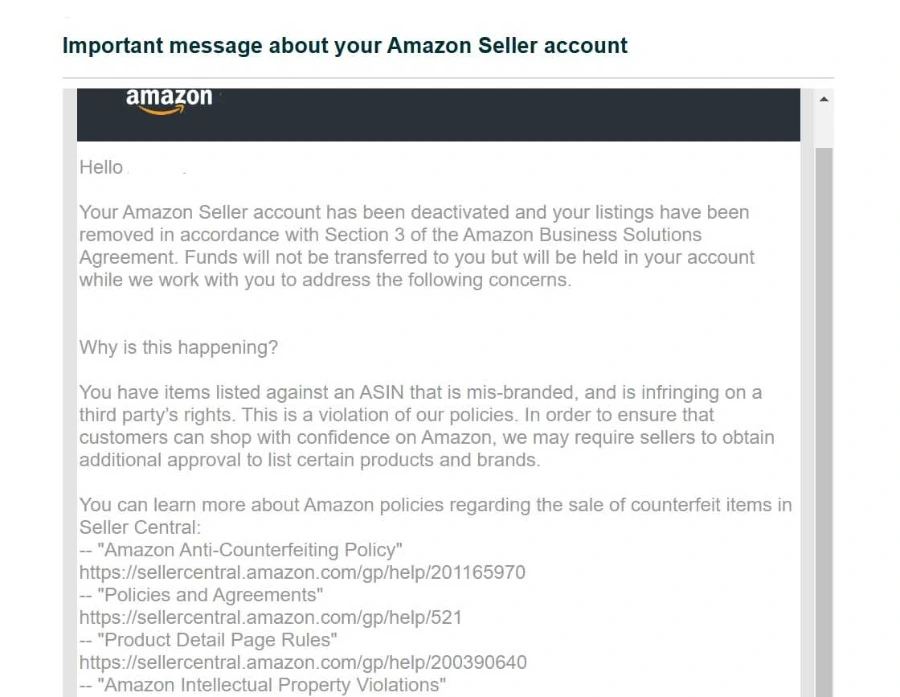
For sellers dealing with Suspension Guides for the first time, the learning curve is steep mainly because the terminology overlaps with several other Amazon processes. It helps to separate what happened from why it happened — a timeline of events paired with the specific corrective steps taken tends to read as more credible than a general apology. Ultimately, the goal is to give the reviewer enough verified detail that no follow-up questions are needed.
Understanding Suspension Guides properly means looking past the surface-level advice and focusing on what Amazon’s investigation teams are actually trained to check. A response that only addresses the single flagged order, without showing what changed operationally, tends to get treated as insufficient even when the facts are accurate. If the case involves multiple linked issues, it is usually worth addressing them together rather than filing separate appeals.