
Amazon Inauthentic & IP Complaint Suspension: Reinstatement Guide
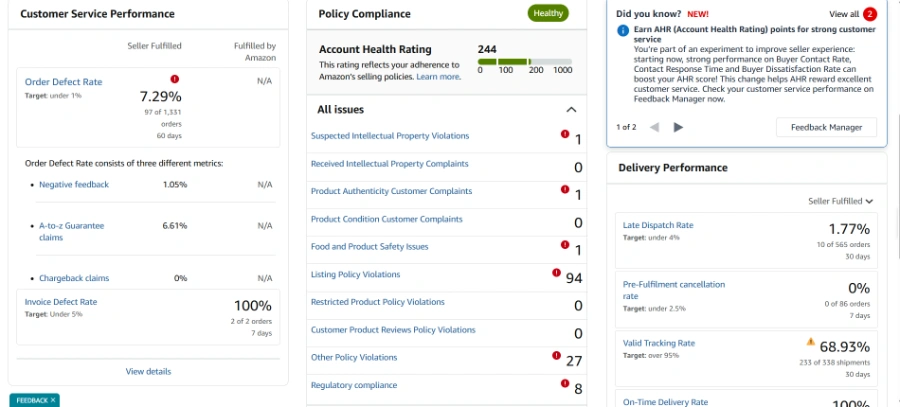
Inauthentic item complaints, counterfeit flags, and intellectual property (IP) complaints are among the fastest-acting suspensions on Amazon — listings and accounts can go offline within hours of a single customer or rights-owner complaint, often before you’ve seen any evidence of what was claimed.
Inauthentic vs. Counterfeit vs. IP Complaint — Different Problems
Each requires different evidence. Confusing them in your appeal — for example, submitting supplier invoices to answer a trademark complaint — is one of the most common reasons these appeals fail on the first attempt.
What Amazon Wants to See
The Invoice Gap: Why Retail Receipts Get Rejected
One of the most common reasons a genuinely authentic product fails an invoice review has nothing to do with the product: it is the wrong kind of document. Amazon requires a finalized commercial (B2B) invoice — one that identifies the supplier’s business, your business, quantities, and dates. A retail receipt (B2C) from a store purchase does not meet this standard, even if the product itself is completely genuine, because it does not establish a verifiable business-to-business supply chain.
This gap is also where inauthentic complaints and dropshipping violations overlap: if an item was dropshipped, you cannot produce an invoice dated before the sale — because you bought it after the customer ordered it. That timing mismatch is often the real, underlying reason an authenticity appeal fails, even when the product itself was genuine.
When the Complaint Is Wrong
Not every inauthentic or IP complaint is accurate. Rights-owner complaint systems can be misused by competitors, and buyer-reported inauthenticity is sometimes a quality or fulfillment issue mislabeled as authenticity. If you believe the complaint is inaccurate, your appeal needs to say so directly and back it with documentation — not just assert good faith. For clearly invalid rights-owner complaints, a direct resolution with the rights owner is often the fastest path back.
How We Approach These Cases
Frequently Asked Questions
Inauthentic flags are often about documentation, not actual authenticity. Weak or missing supplier invoices, or a supply chain that doesn’t match what Amazon expects for that brand, can trigger a flag even on a fully genuine product.
Yes, in some cases. If a rights owner filed in error or the complaint doesn’t hold up, contacting them directly for a retraction is often the fastest resolution — faster than an internal Amazon appeal alone.
Not always, but it carries the highest risk among these complaint types. A first-time complaint with strong supply chain documentation has a real path to reinstatement; repeated complaints are much harder to reverse.
Typically yes, if the account itself is suspended rather than just the listing. See our funds disbursement page for how the current 60-day window works.
Get a Free Review of Your IP or Authenticity Case
Send us the complaint and your supporting documents. We’ll tell you honestly which type of case you’re facing and what evidence it actually needs.
Related Enforcement Types
Authenticity complaints are a supply chain evidence problem and usually cite Section 3. If your goods move through a third party who ships direct to the customer, the invoice trail that fails here is the same one that triggers dropshipping enforcement. If the complaint came alongside an account association, see related and linked accounts.
And whatever suspended your account is also holding your money. Reinstatement does not automatically release a reserve, and since October 2024 the post-deactivation appeal window has been 60 days, not 90. That is a separate fight on a separate clock, and it starts on day one — not after you win. Read how to get held funds released.
Not sure this is your enforcement type? Compare every Amazon violation type — the category matters more than most sellers realise, and an appeal aimed at the wrong one fails no matter how well it is written.
Looking for trademark, copyright, or patent complaints specifically? See the dedicated IP complaints guide.