
Amazon Related Account Suspension: Linked Account Appeals
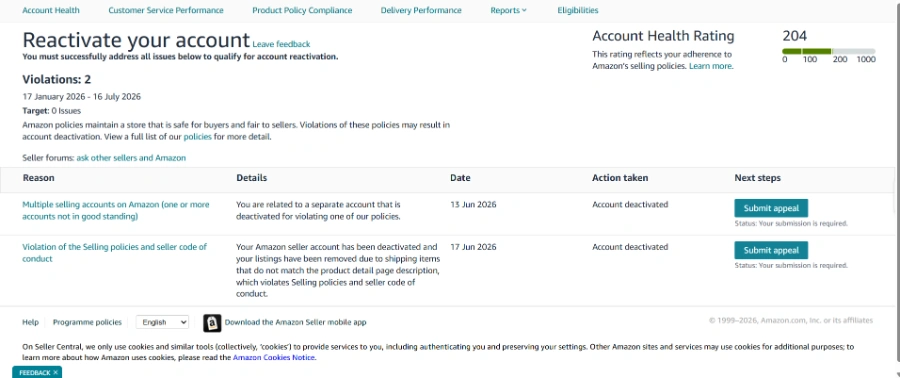
A related — or “linked” — account suspension happens when Amazon’s system detects a connection between your account and another Amazon account, often one that was previously suspended or deactivated. This is one of the hardest suspension types to appeal, because Amazon rarely tells you which account it believes yours is linked to.
What Triggers a Related Account Flag
Why This Suspension Type Is Different
Most suspensions cite a specific policy violation you can respond to directly. A related account suspension is different: Amazon’s system has already concluded there is a connection, and your job is to prove separation and independence — not to argue the connection doesn’t exist, since you often can’t see what triggered it. If you are not certain which account you’re connected to, do not guess in your appeal. Focus on demonstrating your own account’s independence and controls.
Building a Related Account Appeal
How We Approach These Cases
Related account cases require identifying the actual overlap before writing anything — submitting a generic “we are independent” appeal without addressing the specific connection almost always fails. We work through your account history, access logs, and business structure to build a fact-based case for separation, and escalate through additional channels when a first submission is rejected without clear reasoning.
Frequently Asked Questions
Don’t guess. Focus your appeal on demonstrating your account’s operational independence — separate hardware, credentials, banking, and access controls — rather than trying to identify or deny a specific connection you can’t see.
Yes. If you acquired a company that previously had an Amazon account with unresolved issues, shared corporate details (address, banking) can trigger a flag on your current account even though the issue predates your ownership. This needs to be documented clearly in your appeal.
Typically, yes. Related account actions are treated as Section 3 enforcement, which usually freezes account funds. See our Section 3 and funds disbursement pages for how those timelines work.
These tend to take longer than standard Section 3 cases because the evidence required is more extensive. A clear, well-documented first submission moves faster than repeated vague resubmissions.
Get a Free Review of Your Related Account Case
Send us your notice and account history. We’ll tell you honestly what we see and what evidence your case actually needs.
Related Enforcement Types
Related account flags almost always arrive under Section 3, which is why the notice reads as generic. The linking signals frequently overlap with identity verification — the same business details that fail SIV are the ones that link accounts. Where a linked account also carried complaints, expect authenticity or IP allegations alongside it.
And whatever suspended your account is also holding your money. Reinstatement does not automatically release a reserve, and since October 2024 the post-deactivation appeal window has been 60 days, not 90. That is a separate fight on a separate clock, and it starts on day one — not after you win. Read how to get held funds released.
Not sure this is your enforcement type? Compare every Amazon violation type — the category matters more than most sellers realise, and an appeal aimed at the wrong one fails no matter how well it is written.