
An amazon valid tracking rate suspension happens when too many shipped orders are missing valid, trackable tracking numbers. A Valid Tracking Rate (VTR) suspension happens when too many of your shipped orders are missing valid, trackable tracking numbers — Amazon’s threshold is typically 95%. Unlike Late Shipment Rate, this is about tracking data quality, not speed, and it needs a different kind of Plan of Action.
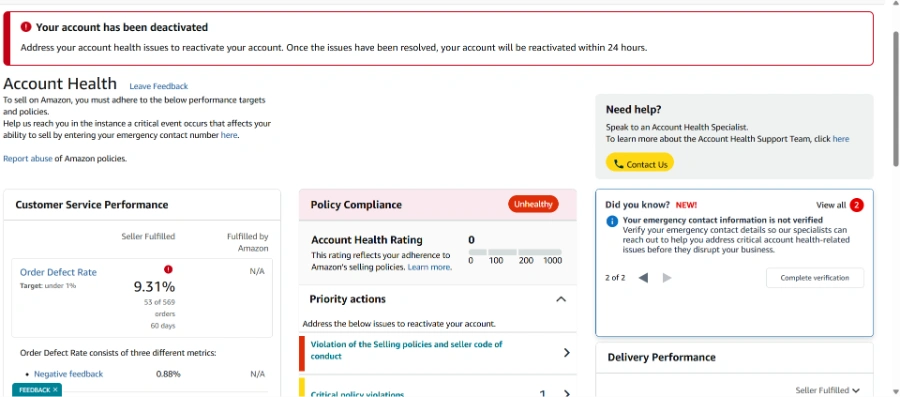
Why Valid Tracking Rate Suspensions Happen
- Using a carrier or method Amazon doesn’t recognize as “valid” tracking (some regional or local couriers aren’t on Amazon’s approved list)
- Manually marking orders as shipped without uploading real tracking numbers
- Tracking numbers uploaded but never scanned by the carrier (dead tracking)
- Buyer-fulfilled or self-ship orders where tracking wasn’t provided at all
- System integration errors between your shipping software and Seller Central
The 3-Part Plan of Action for VTR
Root Cause
Example: “Our Valid Tracking Rate dropped to 89% between [date] and [date] because a subset of orders fulfilled through [carrier/method] did not generate scannable tracking numbers recognized by Amazon’s system. 210 of 1,800 orders in this period were affected.”
Corrective Action
Example: “We switched all affected orders to an Amazon-recognized carrier on [date] and manually verified tracking numbers for the remaining backlog of orders shipped during the affected period.”
Preventive Measures
Example: “We have restricted our shipping settings to only Amazon-approved carriers, added a daily automated check that flags any order missing a valid tracking number within 24 hours of shipment, and set an internal VTR alert threshold at 97%.”
VTR vs Late Shipment Rate: Know the Difference
These two metrics get confused often. Late Shipment Rate is about when you shipped; Valid Tracking Rate is about whether Amazon can verify that shipment happened at all. A POA that addresses shipping speed when the real issue is tracking data quality will be rejected — Amazon’s reviewers check which metric actually triggered the notice.
See our Late Shipment Rate Plan of Action guide →
In practice, Amazon Valid Tracking Rate (VTR) Suspension: How to Fix It rarely comes down to one single document — it’s the combination of evidence that tells a convincing story.
In practice, Amazon Valid Tracking Rate (VTR) Suspension: How to Fix It rarely comes down to one single document — it’s the combination of evidence that tells a convincing story.
This is one of several related situations sellers encounter, so it’s worth understanding how it connects to your broader account health.
Many sellers reach out about Amazon Valid Tracking Rate (VTR) Suspension: How to Fix It only after their first attempt has already been rejected, which makes the second attempt far more important to get right. Account health metrics from the 60 to 90 days before the issue are usually part of the picture reviewers consider, even if they are not mentioned explicitly in the notice. Ultimately, the goal is to give the reviewer enough verified detail that no follow-up questions are needed.
A well-prepared response to Amazon Valid Tracking Rate (VTR) Suspension: How to Fix It issues usually shares a few traits: it is specific, dated, and tied directly to the policy language cited. Cases that reference the exact policy clause, include dated screenshots, and avoid vague language about ‘improving processes’ are processed noticeably faster in most reported experiences. If the case involves multiple linked issues, it is usually worth addressing them together rather than filing separate appeals.
Amazon Valid Tracking Rate (VTR) Suspension: How to Fix It is one of those areas where the difference between a fast resolution and a stalled account often comes down to preparation, not luck. Keeping a running log of supplier communications, tracking numbers, and internal QC checks makes future submissions faster since the evidence is already organized. Escalation paths exist for cases that stall, but they work best after a complete, well-documented first submission rather than as a shortcut.
Amazon Valid Tracking Rate (VTR) Suspension: How to Fix It sits at the intersection of policy compliance and operational history, so a single missing data point can change how a case is read. Where third-party suppliers or freight partners are involved, naming them directly along with dates and order numbers reduces the chance of the case being read as incomplete. None of this replaces reading
the specific notice Amazon sent, since wording and required evidence can vary case by case.
How to Fix an Amazon Valid Tracking Rate Suspension
Before you appeal an amazon valid tracking rate suspension, diagnose which orders lacked valid tracking. Check which carrier, which marketplace, and which integration failed, because the fix depends on the cause. An amazon valid tracking rate suspension appeal that blames the carrier without showing what you changed rarely survives review.
A useful amazon valid tracking rate suspension appeal follows four steps: audit the orders, switch to a recognized carrier, upload valid tracking, and write the Plan of Action and submit. Every amazon valid tracking rate suspension appeal should include the order-level evidence: which orders were affected, what tracking was missing, and what you changed so it does not recur.
An amazon valid tracking rate suspension rarely resolves on its own, because the rate only improves when new orders carry valid tracking. An amazon valid tracking rate suspension appeal should also describe the prevention steps: restricting carriers to recognized ones, a daily tracking audit, and a system check before ship confirmation. Our Amazon suspension appeal guide covers the appeal structure, and held funds follow the funds and disbursement process. Check your case in Amazon Seller Central before you act. If you are unsure what the notice requires, get a free case review before submitting.
Frequently Asked Questions
What counts as valid tracking?
Tracking from a recognized carrier that is scannable and uploaded before ship confirmation. An amazon valid tracking rate suspension usually comes from tracking that is missing, unscannable, or uploaded late, so check all three.
Can I fix VTR without an appeal?
Fixing tracking improves the future rate, but it does not lift an existing suspension on its own. An amazon valid tracking rate suspension needs a Plan of Action that shows the root cause, the fix, and the prevention steps.
How long does a VTR appeal take?
It varies by case type and evidence completeness. An amazon valid tracking rate suspension appeal is reviewed from the case record, so track the case thread and respond promptly if Amazon asks for more information.
Does a VTR suspension affect funds?
It can. An amazon valid tracking rate suspension may hold disbursements while the account is suspended. Funds follow a separate process, so check the notice for the funds steps that apply to your case.