Amazon Suspension Appeal: The Complete Guide to Getting Reinstated
An Amazon suspension appeal is the written case you submit — usually a Plan of Action — asking Amazon’s Seller Performance team to reverse a suspension, deactivation, or hold on your account. It’s reviewed by a person, not an algorithm, and it’s judged on three things: whether you’ve correctly identified the root cause, whether your evidence proves it, and whether your corrective actions would actually prevent a repeat.
Most sellers who come to us have already tried once. They read a template online, swapped in their store name, and got the same rejection back within 48 hours. That’s not bad luck — it’s because generic appeals almost always miss the specific violation Amazon cited, and Seller Performance can tell within the first two sentences.
What Amazon’s Reviewers Are Actually Checking
Seller Performance doesn’t read your appeal for tone or effort. They’re matching it against three checkpoints:
- Root cause accuracy — does your explanation match the actual policy section cited in the notice, not what you assume it means?
- Evidence, not claims — invoices, supplier correspondence, shipping records, or screenshots dated before the suspension, not after.
- Forward-looking controls — specific process changes (a new QC step, a supplier vetting checklist, an inventory reconciliation habit) rather than a promise to “be more careful.”
An appeal that nails root cause but skips evidence reads as unproven. One with evidence but a vague prevention plan reads as a one-time fix, not a systemic one. Both get rejected for different reasons, which is why two “good-sounding” appeals can fail in completely different ways.
The Appeal Process, Step by Step
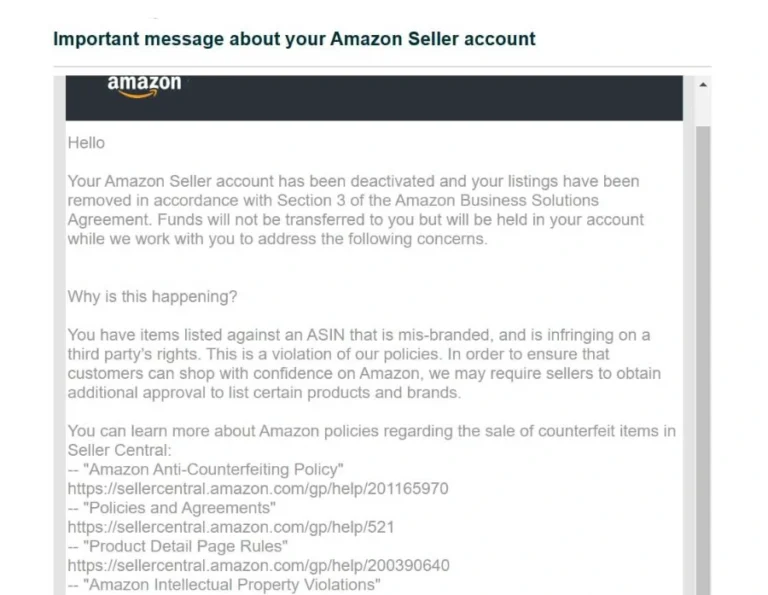
- Read the actual notice twice. Note the exact policy section, the ASIN or order IDs referenced, and the deadline (some notices carry hard cutoffs, particularly ESR and AHR-related suspensions).
- Pull your evidence before writing anything. Writing first and searching for proof after is the single most common reason drafts run long and vague.
- Draft the Plan of Action in three sections: what happened, why it happened, what changes going forward — each one to two tight paragraphs, not a wall of text.
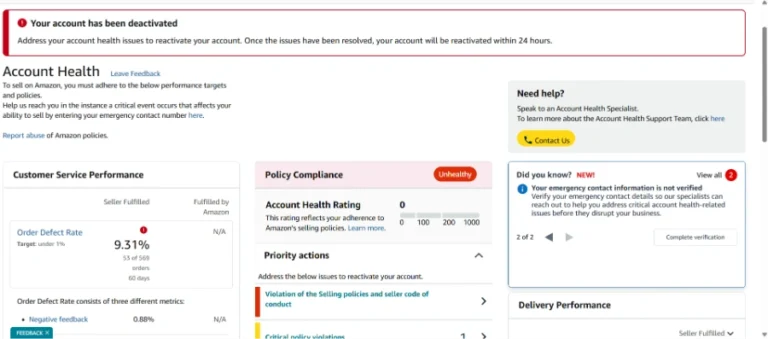
- Submit through the correct channel — Account Health, the case log, or an escalation path depending on suspension type. Submitting to the wrong queue can add days to the timeline.
- Track and follow up on a schedule rather than re-submitting repeatedly, which can flag a case as spam-appealed.
Mistakes That Turn a Fixable Case Into a Permanent One
We see the same handful of errors repeatedly: appealing before gathering evidence, addressing only the single flagged order instead of the pattern behind it, submitting a POA that contradicts what’s visible in Seller Central’s own order history, and re-appealing multiple times in quick succession without changing the substance. Each of these doesn’t just fail — it often makes the next appeal harder, since reviewers can see prior submissions.
Does the Marketplace Change Anything?
The core appeal standard is consistent, but a few things shift by region. US appeals for Section 3 and IP complaints tend to move fastest when evidence is unambiguous. UK and EU cases more often intersect with VAT documentation and P2B Regulation transparency requirements, which US-only templates don’t address. UAE suspensions frequently involve authenticity or listing-accuracy checks with shorter review windows. Canada cases are handled by the same core team as the US but sometimes lag slightly in response time. None of this changes the fundamentals — root cause, evidence, prevention — but a POA that ignores the regional context reads as generic.
Quick Answers
How long does an Amazon suspension appeal take to review?
Most first responses arrive within 2-7 business days, though Section 3 and linked-account cases can take longer since they involve manual investigation rather than a template review.
Can I appeal the same suspension more than once?
Yes, but each resubmission should add new evidence or address a specific gap the rejection pointed to — resubmitting the same POA with minor wording changes rarely changes the outcome.
What if my appeal gets rejected a second time?
A second rejection usually means the root cause explanation still doesn’t match what Amazon’s data shows, or the evidence doesn’t fully cover the violation period — at that point, an escalation through the Account Health dashboard or a formal reconsideration is often more effective than a third standard appeal.
If you’re staring at a suspension notice right now, the fastest thing to get right isn’t speed — it’s matching your response to the exact wording Amazon used. Get a free case review and
we’ll tell you honestly what your case needs before you submit anything.
How to Prepare an Amazon Suspension Appeal
Before you prepare an amazon suspension appeal, gather the notice, the evidence, and a short timeline of what happened. Identify the suspension type and check Account Health for the exact policy section cited. An amazon suspension appeal prepared this way starts from the facts rather than from a template, and that difference shows in the result.
A strong amazon suspension appeal follows four steps: read the notice, gather the evidence, draft the Plan of Action, and submit and track. Name the ASIN or order IDs, attach evidence with plain labels, and keep each section of the plan short and specific. Every amazon suspension appeal should be checked once for accuracy before it is submitted, because a single wrong date or mismatched document can undermine an otherwise solid case.
The most common reason an amazon suspension appeal fails is appealing before the evidence is ready, addressing only part of the issue, or resubmitting an unchanged appeal after a denial. Fix the specific gap the denial names before you submit again. Our post on the Amazon appeal process explains how reviews progress, and how to write an Amazon appeal letter covers the letter format. Check your case in Amazon Seller Central before you act. If you are unsure what your case needs, get a free case review before submitting.
Frequently Asked Questions
What is a Plan of Action?
It is the written case you submit: the root cause, the evidence, and the prevention steps. An amazon suspension appeal is usually built around a Plan of Action, and reviewers judge it on whether the explanation matches the policy section cited in the notice.
Do I need a lawyer for my appeal?
No, in most cases. An amazon suspension appeal is usually handled by the seller with the right evidence and a clear plan. Legal help can matter for complex cases, but a lawyer is not required for a standard suspension appeal.
Can I keep selling other ASINs during a suspension?
It depends on the suspension type. An amazon suspension appeal for a single ASIN usually leaves the rest of the catalog alone, while an account-level suspension blocks all selling until the case is resolved.
What if Amazon asks for more information?
Respond promptly with the specific items requested. An amazon suspension appeal that gets a follow-up question is still alive, so answer the question directly rather than resubmitting the whole appeal unchanged.