Amazon Seller Counterfeit Suspension: How to Prove Your Products Are Genuine
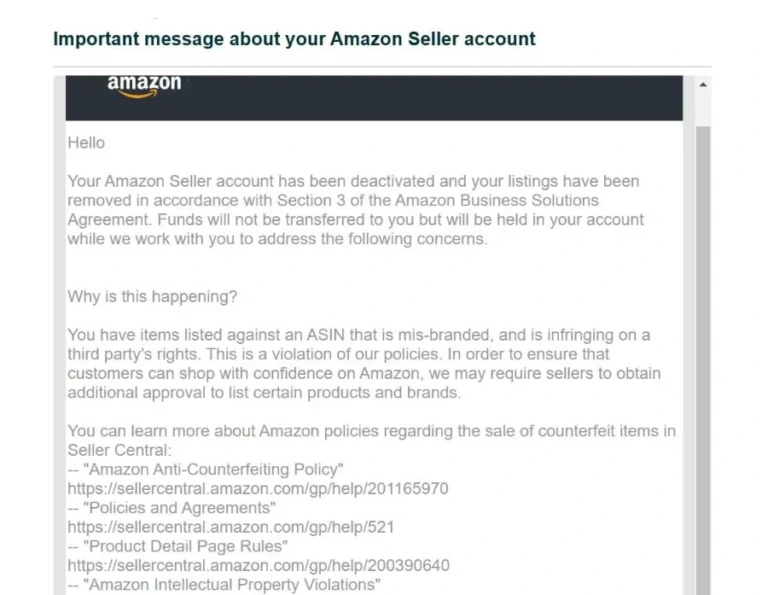
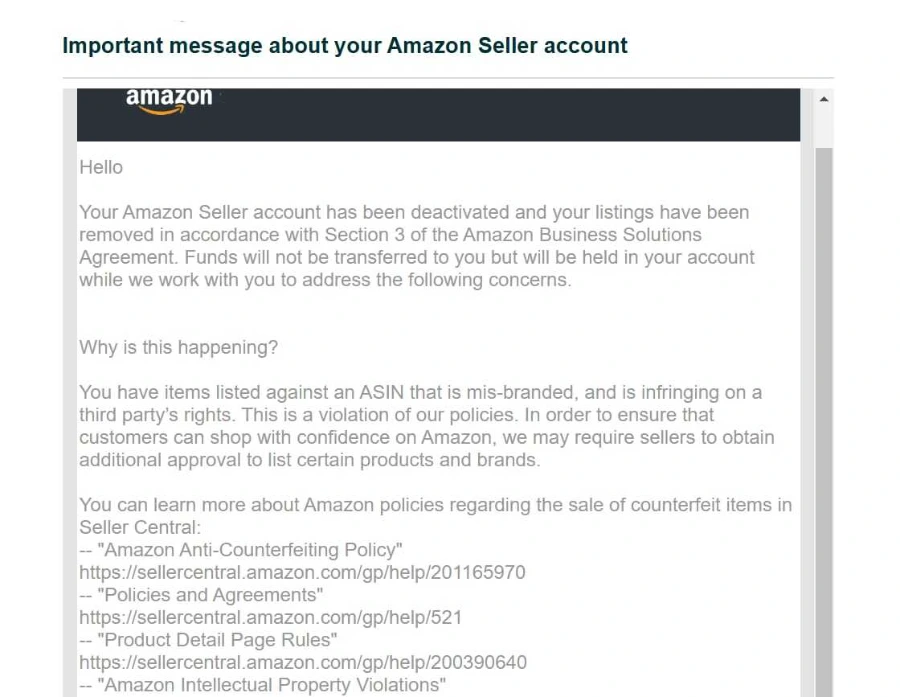
An Amazon counterfeit suspension is triggered when a customer complaint, a rights owner report, or Amazon’s own testing flags a product as inauthentic — and reversing it requires proving a clean, verifiable supply chain from an authorized source, not simply asserting the product is genuine.
Why This Is One of the Harder Suspensions to Reverse
Counterfeit complaints carry more weight in Amazon’s system than most other violation types, because customer trust and brand relationships are directly at stake. Reviewers hold these appeals to a higher evidentiary standard than, say, a shipping-related deactivation. A vague explanation or a single unclear invoice is treated as insufficient far more often here than with other suspension types.
What Actually Counts as Proof
- A complete invoice chain — from a verifiable, traceable supplier, matching the exact quantity and product sold, not a generic receipt.
- Supplier authorization — documentation showing the supplier is authorized to distribute the brand, where applicable.
- A letter of authorization from the brand — the strongest single piece of evidence, though not always obtainable quickly.
- Traceable purchase records — bank or payment records tying the invoice to an actual transaction, since an invoice alone can be disputed as fabricated.
What Doesn’t Help
General statements about business reputation, claims of having sold the product for years without issue, or photos of inventory without accompanying paperwork don’t move a counterfeit case. Amazon’s review is document-based; without a traceable chain from an identifiable, legitimate source, the appeal reads as unproven regardless of how the case is worded.
If the Supplier Won’t Cooperate
This is the situation that stalls the most cases — a supplier who sold genuine product but won’t provide formal documentation, sometimes out of concern about their own exposure. In this scenario, alternative proof — customs paperwork, payment records, or third-party authentication where available — becomes critical, since the appeal can’t rely on supplier cooperation alone.
Quick Answers
Is a receipt enough to prove a product is authentic?
Usually not on its own — Amazon typically wants a traceable invoice tied to a verifiable, authorized supplier, plus supporting payment records where possible.
What if I bought the product from a wholesaler who won’t give documentation?
This is a common and difficult situation — alternative evidence like payment records, shipping documentation, or a written statement from the wholesaler (even informal) can sometimes substitute, though it’s weaker than a full invoice trail.
Can a counterfeit suspension lead to legal consequences beyond the account?
In serious or repeated cases, yes — rights owners can pursue separate legal action independent of the Amazon account suspension, which is part of why documentation quality matters as much for legal protection as for reinstatement.
A counterfeit complaint is not the moment to submit whatever documentation is easiest to find — it’s the moment to be precise about what actually proves authenticity. Get a free
case review before you submit.
How to Respond to an Amazon Counterfeit Suspension
An amazon counterfeit suspension starts with the complaint details, not the invoice folder. Read the notice to identify the ASIN, the complainant, and the exact claim. Then pull the records for that ASIN: the supplier, the invoice chain, the quantities ordered, and the dates. In an amazon counterfeit suspension, the invoice chain matters more than any single document, because Amazon wants to trace the product from a verifiable supplier to your account.
A response to an amazon counterfeit suspension follows four steps: identify the complaint, gather the proof chain, write the plan of action, and submit it through Seller Central. The plan of action should explain where the product came from, show the invoice chain with matching quantities and dates, and describe the sourcing checks you now use before listing a product. Submit it through Amazon Seller Central and wait for a response before following up.
If an amazon counterfeit suspension involves a supplier who will not cooperate, use the alternative evidence you genuinely have: payment records, shipping documents, and any distributor letters that tie the invoice to a real transaction. Do not fabricate or alter documents, because that can end the case permanently. The IP infringement guide explains how rights complaints differ from counterfeit claims, and the Amazon appeal process explains how reviews progress. If you are unsure whether your proof chain is strong enough, get a free case review before submitting.
Frequently Asked Questions
How do I know which ASIN the complaint is about?
The notice usually names the ASIN and the complainant. An amazon counterfeit suspension should be matched to its orders before you write anything, because the proof chain has to cover the exact product Amazon flagged, not your best-selling item in general.
Should I contact the rights owner?
Sometimes a professional message helps. An amazon counterfeit suspension can occasionally be resolved when the rights owner confirms the product is genuine and withdraws the complaint. Keep the message factual, keep records of every exchange, and do not argue or pressure the complainant.
What if the complaint is wrong?
Prove it with the chain. An amazon counterfeit suspension that rests on a mistaken complaint still needs the same evidence: a traceable invoice chain, matching quantities and dates, and a clear explanation of where the product came from. Ask for a re-review with the evidence attached, and do not accuse the complainant in your appeal.
How long does a counterfeit appeal take?
It varies. An amazon counterfeit suspension often needs manual review, so it can take longer than a straightforward policy appeal. Wait for a response before following up, and reply promptly if Amazon asks for more documents.